
Community Health System Strengthening.
Health being a central pillar of RIDE AFRICA, we prioritize inclusive, rights-based, and culturally responsive health interventions that address the unique vulnerabilities faced by women, children, and other vulnerable people in Western Uganda. We focus on strengthening community health systems, improving access to quality and equitable health services, and empowering households with the knowledge and agency to make informed health decisions. This is done through promoting maternal health , sexual, and reproductive health Rights (SRHR), Health Safety Campaign community disease prevention and health promotion. We work in alignment with national health priorities and global health frameworks, including the Sustainable Development Goals (SDGs), particularly SDG 3 on Good Health and Wellbeing, SDG 5 on Gender Equality, and SDG 10 on Reduced Inequalities
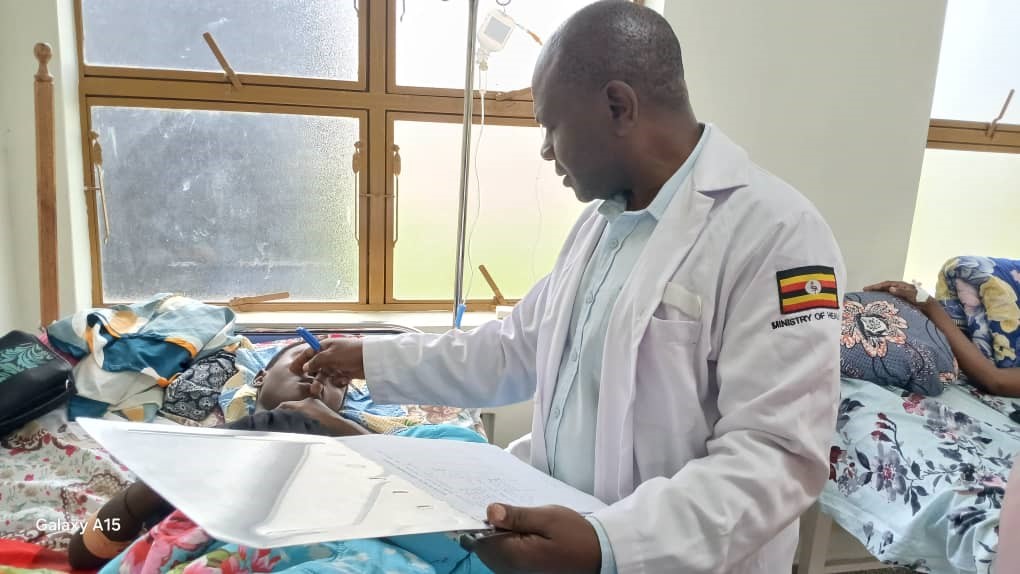
Dr. Magezi appreciates RIDE-AFRICA’s community campaigns on maternal health .
Safe Delivery Saves Lives Campaigns.
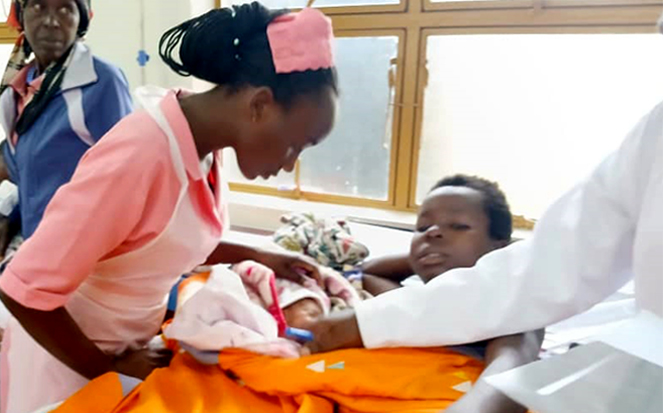
In Ruteete Sub-County, many mothers used to give birth in their homes with the help of traditional birth attendants. Some mothers had serious problems, like too much bleeding because there was no medical help nearby. Many reached the health center when it was already too late. “Before, we lost many mothers and babies because they came late or delivered in villages.” Says Sarah a nurse at Ruteete Health Centre IV.
Then RIDE-AFRICA started campaigns to sensitize and mobilize the community. They met local leaders, families, and traditional attendants to teach about the dangers of home delivery and the importance of delivering at the health center.
Currently, more mothers come early for antenatal care and choose to deliver at the health center. There are fewer cases of complications, and mothers receive better follow-up after giving birth. Even traditional birth attendants now support the health workers by referring pregnant women for safe delivery.
“We thank RIDE-AFRICA,” says Nurse Sarah. “Because of their work, more mothers and babies are safe today, and our community understands the value of skilled care.”
Nutrition Gaps in Uganda in Relation to SDGs.
Uganda faces significant nutrition challenges that impact health, economic productivity, and social equity. These gaps are not only public health issues but also barriers to achieving Uganda’s commitments under the SDG 2 (Zero Hunger) and SDG 3 (Good Health and Well-being).
At the national level, Uganda continues to face persistent nutrition gaps despite efforts to improve outcomes. According to the latest demographic and health data, about 26 % of children under five years are stunted, underweight (10 %), and yet 3 % of food put to waste which is a reflection of a chronic and acute under nutrition across the country. Only a small proportion of young children achieve a minimum acceptable diet, with only about 7 % meeting basic dietary diversity and feeding standards, indicating widespread inadequacies in diet quality. Micronutrient deficiencies such as anaemia remain common, especially among children and women of reproductive age, and the country is also experiencing a double burden of malnutrition, where overweight and diet-related non-communicable diseases coexist with under nutrition. These gaps are driven by limited access to diverse, nutrient-rich foods, socioeconomic inequities, and insufficient nutrition education and services, leaving Uganda off track to achieve national nutrition targets.
Tooro and Rwenzori areas where we operate from, the nutrition landscape reflects both similar and region specific challenges tend to be worse than the national averages, with stunting rates in Tooro and surrounding areas reported at around 38–40 %, substantially higher than the national level. This occurs even in agriculturally productive settings that paradoxically produce abundant food yet struggle with poor dietary outcomes due to factors such as selling most produce instead of consuming it at the household level, limited nutrition knowledge, and cultural feeding practices. School age children and women, and under-fives in our operating areas area also contend with low consumption of diverse foods, especially traditional fruits and vegetables that are locally available but underutilized thus contributing to micronutrient gaps and sustained malnutrition risk. (Mountains of the Moon University).
Kabarole District reports highlight persistent barriers such as poor access to diverse and nutritious foods in rural communities, seasonal food insecurity and cultural beliefs that affect the uptake of optimal feeding practices. Community nutrition efforts have struggled with limited funding, and although screening and training initiatives have reached many households, gaps in dietary diversity and knowledge remain significant (Kabarole District Government). These overlapping national and regional gaps illustrate the complex nutrition challenges in Uganda: while broader drivers like poverty, inequitable food systems, and insufficient nutrition education affect the entire country, specific regions like Tooro experience amplified burdens due to local socioeconomic and cultural dynamics that require tailored and context-sensitive intervention.
The District Community Development Officer Kabarole acknowledges RIDE-AFRICA for their strategy dubbed ” comprehensive community-bases approach” to improve Maternal Nutrition through Nutrition awareness, increase meal frequency during pregnancy and breastfeeding and address harmful food taboos affecting women. Taking Micronutrient supplementation as recommended by health workers to boost food security and Livelihood support.
Building Safer Communities Through Awareness and Action.
Uganda continues to face serious public health and safety challenges arising from road traffic accidents and communicable diseases such as HIV/AIDS, malaria and tuberculosis (TB). These challenges contribute significantly to preventable illness and death, slow socioeconomic development and place heavy pressure on the national health system. The situation is particularly concerning in urban and peri-urban areas such as Fort Portal City and the wider Tooro and Rwenzori regions.
Road traffic injuries remain one of the leading causes of death and disability in Uganda. Police reports indicate that more than 5,100 people lost their lives in road crashes in 2024 alone, with thousands more sustaining life-altering injuries. Risky behaviors such as speeding, non-use of helmets by boda boda riders, mobile phone use while riding and disregard for traffic laws continue to drive these fatalities. At the same time, communicable diseases remain a major threat. Uganda has approximately 1.4 million people living with HIV, with an estimated 53,000 new infections each year. In Fort Portal City, HIV prevalence is significantly higher than the national average at between 14.3% according to Uganda Aids Commission report 2024. Stigma, unsafe sexual practices and low uptake of preventive services continue to undermine progress.
Malaria remains Uganda’s leading cause of illness, with one of the highest incidence rates globally about 478 cases per 1,000 people annually. In 2023 alone, the country recorded over 16 million malaria cases, most of them affecting children under five and pregnant women. Tuberculosis also remains a major concern, with an estimated 96,000 new TB cases annually and high rates of TB-HIV co-infection. Delayed care-seeking and low awareness of early symptoms contribute to ongoing transmission.
Across these challenges, a common underlying factor is behavior unsafe road use, risky sexual practices, inconsistent use of mosquito nets, delayed health seeking for TB symptoms, and persistent stigma. Addressing these behaviors through community driven education and engagement is essential for sustainable change.
RIDE-AFRICA is dedicated to making the Tooro and Rwenzori regions safer places to live and work by addressing road safety and public health challenges through Behavior Change Communication (BCC) and community empowerment. Working closely with local communities, RIDE-AFRICA promotes personal responsibility for health, safety and well-being using local radio talk shows, community dialogues, workplace sensitizations and outreach activities that deliver practical and culturally relevant messages capable of driving lasting behavior change.
RIDE-AFRICA places strong emphasis on health safety and disease prevention, particularly HIV, tuberculosis and malaria, by promoting safe sexual practices, HIV testing, early TB screening and treatment adherence and consistent use of mosquito nets at household level. Ms. Evans, the TB Focal Person In Fortportal City, noted, “We are seeing more people coming for TB screening than before. Many are arriving early and those who test positive are starting treatment on time, which is already improving recovery and reducing further spread in the community.” RIDE-AFRICA also prioritizes road safety, especially among boda boda riders, by encouraging careful riding, helmet use and adherence to traffic laws, while reinforcing that road safety is a shared responsibility. In addition, workplace safety sensitization for young apprentices in carpentry, welding and mechanics equips them with essential protective and safety skills. Through this integrated approach, RIDE-AFRICA is strengthening community ownership of safety issues, reducing preventable risks and contributing to Sustainable Development Goals 3.6 on road safety and 3.3 on ending HIV/AIDS, TB and malaria.
Strengthening Community-Led Responses to HIV/AIDS, TB, and Malaria in the Rwenzori Sub-Region.
RIDE-AFRICA has strengthened community-led responses to HIV/AIDS, Tuberculosis (TB), and Malaria in the Rwenzori Sub-Region by working closely with communities, local health structures, and duty bearers. Our experience shows that these diseases are best addressed when communities are informed, organized, and actively involved in prevention, early care-seeking, and accountability. In the Rwenzori region, health challenges are closely linked to poverty, stigma, gender inequality, and limited access to information, especially in hard-to-reach communities.
Health awareness and response to HIV/AIDS, TB, and Malaria are integrated into RIDE-AFRICA’s community programs that reach women, youth, families, and vulnerable households. Parenting programs, youth empowerment activities, and livelihood initiatives provide practical health information alongside social and economic support. Women and youth participating in over 210 self-sustaining village savings and loan associations have become key platforms for health education, stigma reduction, and peer support. Economic empowerment has enabled members to seek timely care, complete treatment, and adopt preventive practices such as malaria control at household level.
Support to child-headed households and youth in vocational skills training includes health education and referral linkages to HIV, TB, and Malaria services. This integrated approach reduces vulnerability, promotes responsible choices, and improves access to testing, treatment, and prevention services.
Through participatory action research and community dialogue, RIDE-AFRICA has supported communities in Kyenjojo District to identify barriers to effective health services. These include low awareness in remote areas, stigma among adolescents and youth, drug stock-outs, and weak communication between health facilities and communities. Community-generated evidence has improved engagement with health workers and district leaders, leading to better information sharing and follow-up.
Village Health Teams play a central role in this work. RIDE-AFRICA strengthens their capacity in health education, referrals, follow-up, and community reporting, while promoting strong linkages with health facilities. With trusted community structures and proven approaches in place, RIDE-AFRICA is well positioned to scale community-led responses to HIV/AIDS, TB, and Malaria across the Rwenzori Sub-Region through strategic partnerships and support.