
Democracy and Good Governance
The program strengthens citizen participation, accountability, and transparency in local governance to improve the quality of public service delivery. To achieve this, our interventions focus on social accountability, participatory planning and budgeting, public service monitoring, and multi-stakeholder engagement for responsive and inclusive service delivery. For example our Participatory Action Research (PAR) model, which empowers communities to study local challenges, generate evidence, and engage communities, stakeholders and leaders to act on the identified and prioritised community gaps in service delivery.
Interventions Under Democracy and Good Governance
1) Participatory Action Research Initiative (PAR)
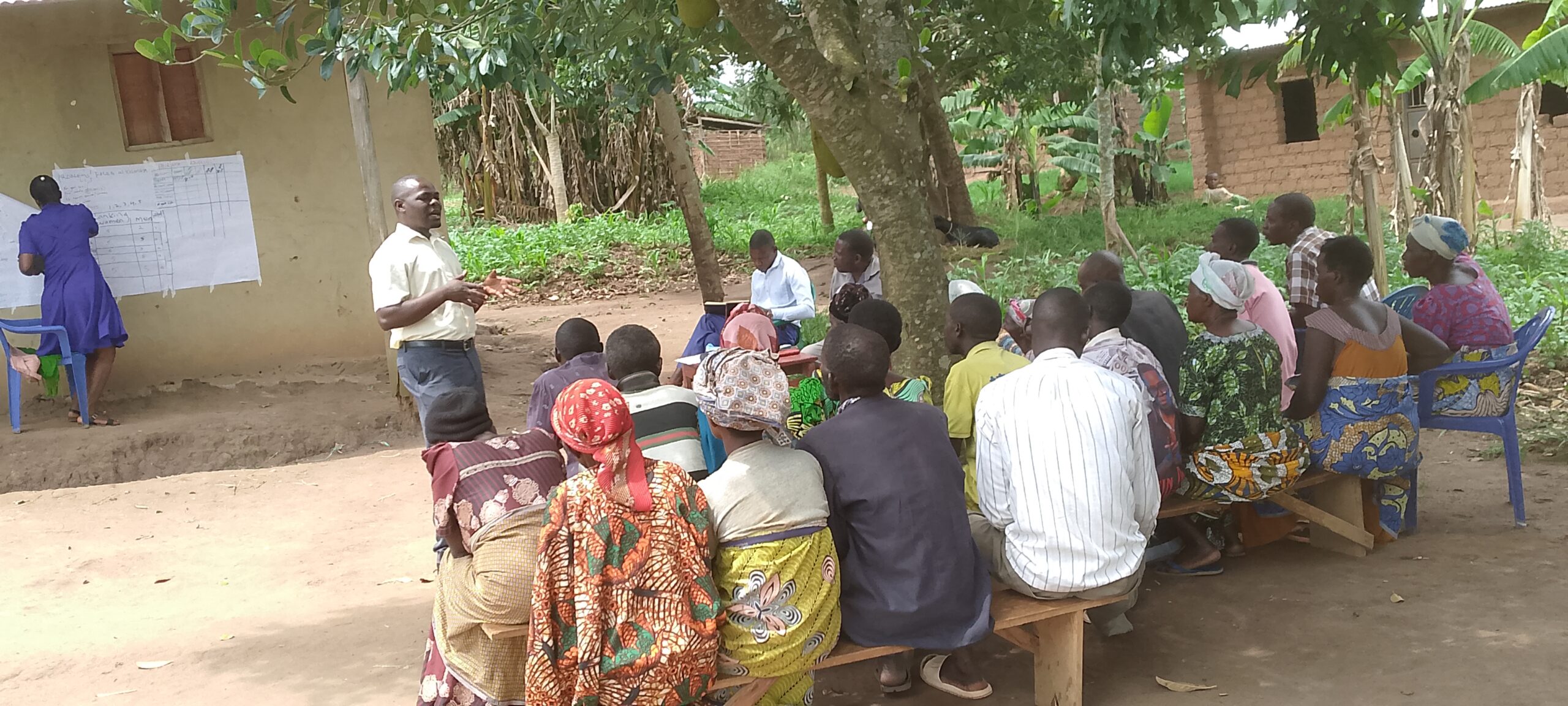
Participatory Action Research (PAR) is RIDE-AFRICA’s core approach to strengthening citizen participation and accountable governance. Through PAR, communities are empowered to identify local challenges, generate evidence, co-create solutions, and engage duty bearers through constructive dialogue to improve service delivery and build trust.
The initiative is implemented in Bufunjo, Kanyegaramire, Nyabuharwa, Nyantungo, Bugaaki sub-counties, and Rugombe Town Council. Selected community members are trained as Change Agents to facilitate community consultations, document service delivery gaps, and mobilise collective action.
Working with Citizens’ Follow-Up Committees (CFCs), local leaders, and service providers, these Change Agents support monitoring, petitions, and structured engagement platforms such as barazas at sub-county and district levels.
Using PAR tools, communities have successfully influenced local development decisions, contributing to the improvement of over 170 kilometers of feeder roads, expansion of school infrastructure through parental contributions, and acquisition of land for public health facilities. Local governments have responded by integrating community priorities, including health center construction, into approved budgets.
2)Public Expenditure Tracking and Social Audits
RIDE-AFRICA promotes public expenditure tracking and social audit interventions to strengthen transparency, accountability, and community oversight of public services.
In Kyenjojo and Kyegegwa districts, communities were supported to understand local government plans, contracts, and budgets and to actively monitor service delivery. Through community awareness meetings and participatory monitoring, citizens identified poor workmanship by a contractor tasked to reconstruct a shallow well. Using evidence collected by community monitors, the issue was formally raised with local authorities. As a result, the contractor was instructed to redo the works to the required standard, restoring access to safe water and demonstrating how citizen oversight can improve service quality.
In Kyegegwa District, sustained community monitoring and social audit processes exposed repeated cases of non-compliance and poor performance by service providers. Following evidence-based engagement with district authorities, more than four contractors were blacklisted from bidding for future government contracts. This action sent a strong signal on accountability and contributed to improved standards in public procurement and service delivery.
These experiences show how informed and organised citizens can influence public expenditure decisions, reduce misuse of public resources, and strengthen trust between communities and local government.
3) Natural Resource Governance

Natural resource governance is a key area under RIDE-AFRICA’s Democracy and Good Governance pillar. RIDE-AFRICA’s main intention is to respond to persistent challenges related to human–wildlife conflict, limited community participation in natural resource governance, and the exclusion of women and youth from decision-making processes that affect the management and use of natural resources in the Tooro and Rwenzori sub-regions of western Uganda.
RIDE-AFRICA supports communities to understand their rights and responsibilities, generate evidence on local challenges, and engage constructively with conservation authorities, local governments, and other stakeholders. Particular attention is given to strengthening the voice and leadership of women and young people, whose livelihoods are often most affected yet least represented in natural resource governance structures.
Through participatory dialogue, community monitoring, and inclusive engagement platforms, RIDE-AFRICA promotes transparent, fair, and sustainable management of natural resources that balances conservation goals with community livelihoods, reduces conflict, and strengthens trust between citizens and institutions
These interventions have strengthened community participation, especially of women and youth in natural resource decision-making, improved the management of shared resources, reduced human–wildlife conflict, and fostered more transparent and inclusive governance of ecosystems in the Tooro and Rwenzori sub-regions.